
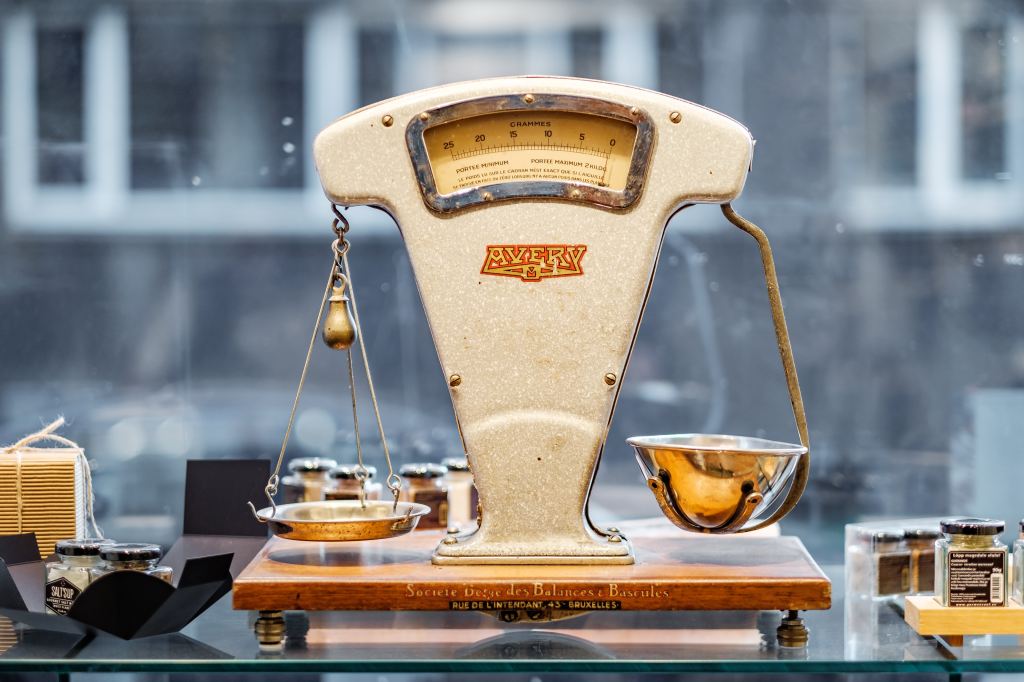
Some of my favourite moments in Storehouse are the ones where I look out across a room and I can’t work out who’s being served and who’s doing the serving. Who’s “on team” and who’s come in seeking help. Those moments feel like real wins to me. They remind me that I need to resist my propensity to put people in boxes. To try and evaluate interactions before they happen and pre-plan the best outcomes. To weigh and measure people rather than to simply engage.
I’ve been doing this thing long enough now to, from time to time, have a decent sense of where an encounter is going to end up. I can, almost without thinking, assess someone’s needs from the first nuggets of information, from their file on our system or from simply what I can observe and I can tear off in my mind as to what help they need, which path or programme I need to point them to or how we aren’t the right place to meet their needs and in all that, I can entirely miss them and what they’re saying. I can get them to the end result and in doing so, without intention, trample right over the top of who they are. It’s a really easy trap to fall into.
A few years back a read a book called God so loves the city, it’s a collection of essays from various authors and in it Kathryn Mowry wrote a line that floored me. She said
“I wonder how many times of shared laughter over coffee cups does it take to make up for one time of standing in a food line holding a number.”
It has, in the best possible way, haunted me ever since. What damage might we inflect in the act of “helping”? In a broken and hurting world, in a moment of so much need, physical, emotional and relational, it is so easy to measure success by the tangible outcomes and completely miss the unintended consequences of our actions. To hit some sort of preset goals or mission objectives without actually seeing those we set out to love. We can, in the doing of good, do much harm.
Those who are hungry or thirsty need sustenance, those who are naked (or without adequate clothing) need clothes, those who are strangers (or even just a little strange by our judgements) need invited in, those who are sick or locked away in prisons, real or emotional, need visited, need cared for and supported. All that is as true as when Jesus declared it but I don’t believe for a second he meant the feeding or clothing or physical caring was the point, per se. I firmly believe those actions were to flow from eyes that truly seen and hearts that truly engaged.
Just a cursory glance at his way of life shows him touching the unclean, who had gone so long without physical touch. He could have healed from a distance but he chose not to. He insists on stopping with the woman who touched his cloak. She was already healed, but 12 years of isolation and shame leaves a mark. He stops to weep with the grieving, even as he prepares to raise their dead. He, again and again, asks those with the most obvious of needs, what do you want? It is a master class in not rushing to an end, not trampling over agency or assuming the desires of someone else’s heart. It’s a class we may all need to resit many times.
Most people, most of the time, have a desire to do good (I think), but if the good is measured simply in achieving some tangible outcome, however noble or noteworthy that outcome, we run a strong chance of missing the point. If getting food to the hungry is the point, I’ll give to a foodbank. It’s the most efficient way of achieving a fixed result. If an entirely different way of life (some might call it the kingdom come) is the point, where we recognise the injustice and imbalance in how the world’s resources are distributed, where we see the heartache and pain that greed and selfishness has caused, where we realise that not all choices are equal and not all personal mistakes are as black and white as we’d like to claim. Where we see a mutuality between our daily life and the lives of all of humanity, including those in our city right now who are experiencing the pain and shame of a lack of food, then maybe an invitation to my table might be more appropriate than a foodbank donation. Then a sandwich and a coffee bought and shared over conversation might be the way to go. Maybe following my donation to come and serve, to be present in the giving or maybe starting with simply siting down and asking questions of those who are present. Hearing firsthand what life is like for those we feel compelled to help and allowing our hearts to begin to engage in the wrestle.
We can’t franchise our indignation at injustice or outsource our compassion to those more qualified. We can’t throw some money in the direction of a charity or sign a petition for a cause or repost on social media and consider it job done. If we do, chances are, we’re choosing to simply reach for results, prioritising outcomes over people. At best we miss the heart engagement, we miss the opportunity for personal transformation for both ourselves and those we seek to help and at worst we do damage, allowing the ends to somehow justify the means.
People aren’t problems to be solved. Poverty is not an issue to be fixed so much as it is a complex set of marred and twisted relationships needing entered into and patiently, slowly, lovingly, untangled. We must not rush for an end, however good, if the getting there devalues and dehumanises those around us.
Photo by Piret Ilver on Unsplash

 Some things i think...