
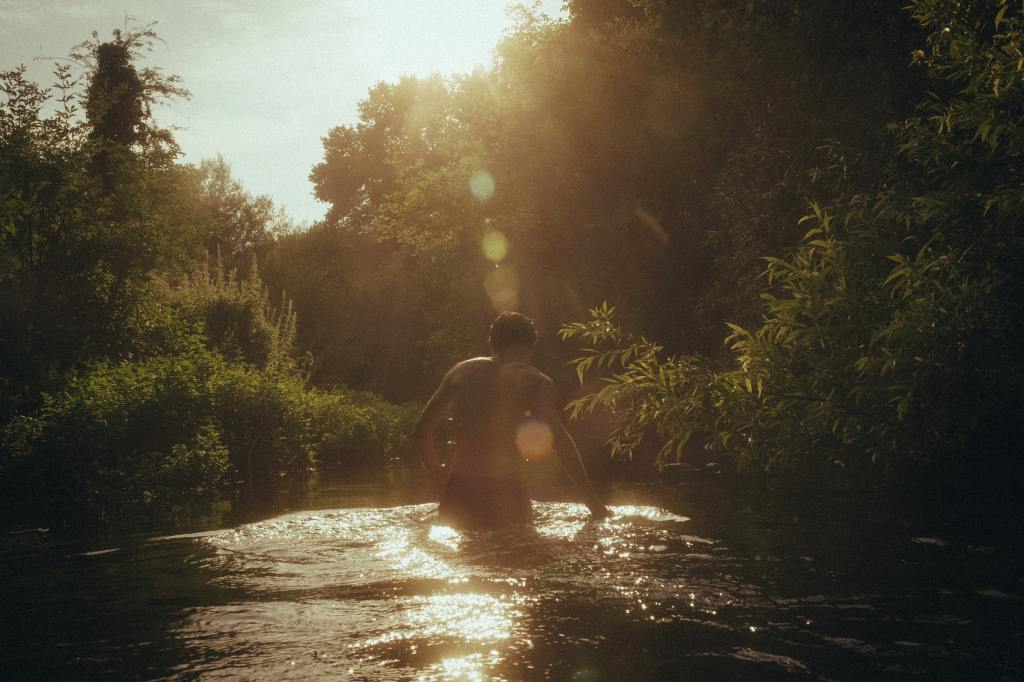
In his hauntingly good ballad, The River, Springsteen sings of a future lost. Of the hopes and dreams of youth snatched from the grasp of the characters he so masterfully creates. In the 3rd verse he declares “Now I just act like I don’t remember, Mary acts like she don’t care” yet the sense of loss, of yearning and despair reverberates throughout the whole piece. Later he questions “is a dream a lie if it don’t come true, or is it something worse?” It’s a line I have often pondered in my almost 20 year love of all things Bruce. It’s a thought I have been dwelling on recently more than ever. I’m fairly sure I still don’t fully get it, don’t fully grasp the depths of what he’s poking at but I am more acutely aware than ever of the power of a dream, the power of a longed for life that isn’t yet our reality.
From desperately wanting to be on the other side of this pandemic wilderness to the longing for a slimmer, more toned body that constantly evades to the yearning for a soul mate or a child or a career with significant purpose or whatever the dream is for you, we all know the power of wanting something that isn’t our current experience. It is this longing, this dream that, I believe, keeps us moving, keeps us pressing forward. It is the belief in a preferred future that gives us the courage to face our present moment, with all its disappointments, and to reach out for more. All throughout the scriptures we see this constant theme of longing, this constant belief in a future goodness that keeps the present in perspective. In his insightful read, The Gifts of the Jews, Thomas Cahill writes of how the Jewish people were the first to see life not as cyclical, as an irresistible, unchanging cycle of events but as linear, as moving towards a future which our present actions have impact upon. He writes
“Since time is no longer cyclical but one-way and irreversible, personal history is now possible and an individual life can have value.”
It was a revolutionary thought which impacted the rest of human history and it is this idea of a preferred future that I’m currently wrestling with. It seems, in my limited experience, that one of the things poverty, especially generational poverty, does is it steals the freedom to dream. It takes away the ability to imagine a preferred future. When life is reduced to survival or to the grind of severely curtailed options it becomes more and more difficult to imagine a different way of being. When the message coming from every direction is “this is all you can expect” or “this is what you deserve” is it any wonder that nothing seems to ever change? Without a dream, without a vision of a future that is better than the now there is no drive, there is no impetus for change. There is simply a never ending, untouchable cycle of events that happen to us, that we are powerless to impact in any way, so why even try? It is, I think, the ability to imagine a preferred future that gives us the courage to face the present.
It is the distant notion of a summer holiday or an Easter or half-term break that gives many of us the ability to endure those cold, dark, post-Christmas, January mornings or closer to home it is the idea of a Friday takeaway by the fire, weekend stretched in front of us that gives us the drive to face a Monday morning. Dreams have power, they shake us and shape us and keep us moving. Even if they are never fully realised the very notion of them keeps us alive. How then to do we help those around us dream once more? How do we stir up creativity, imagination, the embers of a fleeting notion, a whisper, of something better? How do we help those who can’t currently articulate a preferred future dream again so that they might begin, with courage and patience, to move out of the moment they seem caught in?
Answers on a postcard!
I’m still in the wrestle, still in the ponder but I am convinced that helping people dream again is more important than “fixing”, more freeing than neatly packaged “solutions” to complex challenges. I’m pretty sure it has something to do with passion, with exploring new skills and interests, with play over production and community before competency. I think it is more likely to come over coffee or clay or football than in a classroom or with a handout. I’m utterly convinced that learning to dream is slow work, is messy work, is hard to measure and is probably unspreadsheetable (though I’ll most likely give it a try) but I am also convinced that it is the original work of a God who imagined a world into being and then entrusted its care and completion to a people imbued with his own ability to imagine, to dream and to create what isn’t yet from what is currently in our hands. Anyone up for dreaming?
Photo by Tyler Palmer on Unsplash

 Some things i think...