
I don’t like this blog! At my core I am an engineer, I love logic and systems and spreadsheets and, despite the title, efficiency. An early life mantra of mine was “there’s always a better way”. In some respects, I still believe this to be true, nothing in life is one hundred percent efficient and with re-thinking and re-working pretty much anything could be made more so, but as I rode Belfast’s newest bus system “the Glider” one morning last week I began to ponder the benefits of efficiency. There is no doubt the new system is slicker and faster but as I was crammed tight against several strangers, standing (and almost falling) for the entire journey I kind of missed my seat on the old double decker, slow as it was. I missed the time of reading and pondering and watching the city slowly pass me by. Don’t get me wrong, I’m all for progress and I’m all for advancement, I think God is too because what starts in a garden ends in a city, it’s in the book, but what is the cost we are willing to pay for efficiency?
Why is it that in one area of our lives we will sacrifice all our comfort, and a good chunk of our dignity, to get to work a few minutes quicker and yet in other areas we will spend endless amounts of money on hedonistic pleasure? We will give more than we can afford for comfort we don’t really need. I don’t get it. After a good few days of pondering I still don’t get it but I think it has something to do with competition. We are constantly competing against the world around us, and ourselves. Endlessly comparing and evaluating. Am I loved? Am I liked? Am I a better employee than him? Am I more valued than her? We our daily trying to squeeze the last drop out of everything. Can I have 2 more minutes in bed and still get to the office in time? Can I get to the office just 2 minutes earlier so everyone can see I’m first in? Can I squeeze in one more email, one more text? Can I receive one more like? We are conditioned to believe that we are what we produce, that our value is in what we achieve. We need to stand out, need to make our CV’s pop, always fight to be noticed one way or another. Introvert or extrovert, we still want what we do to be seen because it impacts who we are, or so we’re told and so of course efficiency becomes key. There are only so many hours in the day, only so much of me, so I better maximise it all.
But what of those who can’t play the game? Those who never had a chance in the competition? With every increase in efficiency, ever progress in output the competition heightens, and the margins grow wider. The unwanted, unneeded, unsuccessful get cast further aside and the biggest danger for me is in allowing the mindset of efficiency to infect the world of compassion. When we set out over a decade ago to “fight food poverty” in Belfast I was an engineer. I wanted to build the most efficient system to get food to the hungry. 10 years on I’ve realised, in this context at least, efficiency is not the goal. Efficiency keeps me from engaging with people. Efficiency reduces people to numbers. Efficiency increases output at the cost of dignity. It is efficiency that forces us to rush over the importance of people’s stories, the importance of their agency in their own lives. The temptation to be “better” at what we do actually has the potential to remove us further and further away from those we are attempting to welcome and love.
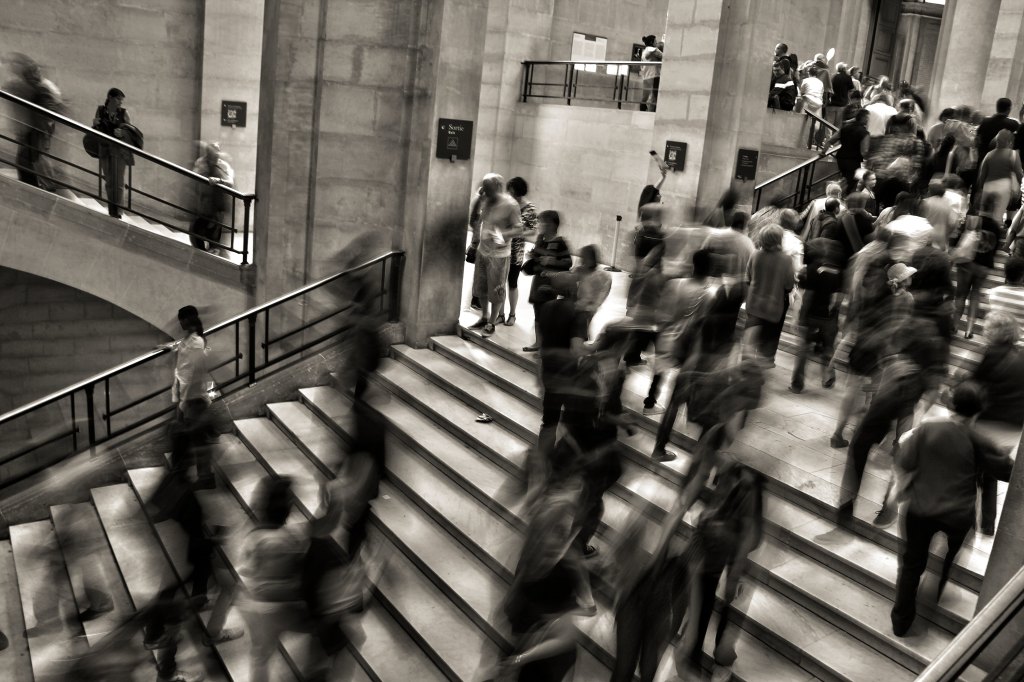
In every area, lack of resource and desire for recognition will always push us towards efficiency but efficiency will almost always take us away, at least in relational terms, from each other. Hurry and busyness are killing us in the name of efficiency. No wonder we spend so much at the other end to try and regain our comfort. What if we simply slowed down, stopped playing the game, if only for a brief moment, stopped comparing and competing with each other and instead embraced the chance to connect? What if we measured success, not in terms of output but in terms of interaction, in terms of joy experienced in each other’s company, dignity bestowed and stories shared? What if people were always more important than output? Efficiency may well need to be redefined…
Photo by José Martín Ramírez C on Unsplash

 Some things i think...